An academic essay is a focused piece of writing that develops an idea or argument using evidence, analysis, and interpretation.
There are many type of essays you might write as a student. The content and length of an essay depends on your level, subject of study, and course requirements. However, most essays at university level are argumentative —they aim to persuade the reader of a particular position or perspective on a topic.
Academic Essay Writing Guidelines
The Four Main Types of Essay | Quick Guide
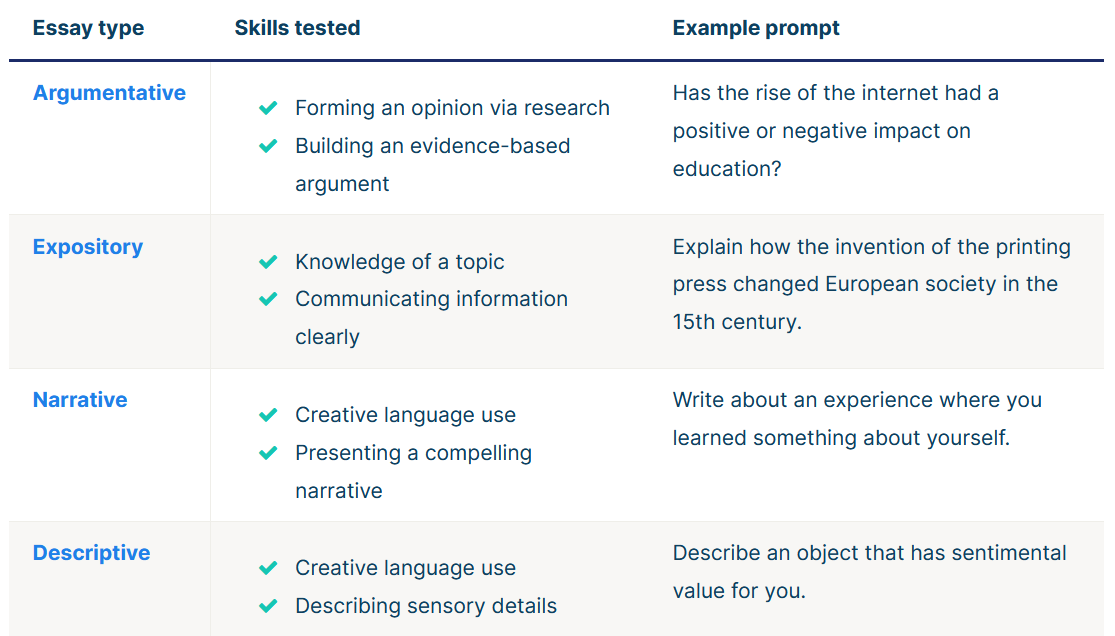
An essay is a focused piece of writing designed to inform or persuade. There are many different types of essay, but they are often defined in four categories: argumentative, expository, narrative, and descriptive essays.
1. Argumentative Essay
Presents a clear claim, supports it with evidence, counters opposing views, and persuades readers using logic and credible reasoning.
2. Expository Essay
Explains or informs about a topic clearly and objectively, using facts, examples, and analysis without personal bias.
3. Narrative Essay
Tells a story or recounts an event, focusing on characters, plot, and personal experiences to engage the reader.
4. Descriptive Essay
Creates vivid imagery by detailing senses, scenes, people, or objects, allowing readers to experience the subject fully.
Similarities and Contrast
Comparison of Four Main Types of Essay
An essay is a piece of writing that is written to convince someone of something or to simply inform the reader about the topic. The four main types of essays are similar in structure and purpose, and have the following key elements: focus, style, evidence, and audience awareness
Key parts of an Academic Essay
1. Introduction
Introduces the topic, provides background information, and presents the thesis statement or main argument.
2. Body Paragraphs
Develop the main ideas, provide evidence, examples, and analysis to support the thesis statement.
3. Counterargument / Discussion
Addresses opposing views or alternative perspectives to strengthen the argument (optional in some essays).
4. Conclusion
Summarizes key points, reinforces the thesis, and provides a final thought or call to action.